In continuation of my last article on Tanner Houck’s unique pitch mix, I think it has interesting implications on the pitching injury epidemic. If velocity is documented as a likely causal factor in arm injuries, does that make pitchers like Houck more valuable?
I merged a database of Tommy John Surgeries from @MLBPlayerAnalys with a pitch velocity and usage dataset from baseballR packages to gather some insights. Out of the 115 pitchers in the TJ surgery database who pitched in 2024, their average velocity was 93.6 mph on their 4-Seam Fastballs. This number is in line with MLB averages, but this MLB average has been steadily climbing over the years along with UCL tears. In a study recently published, the MLB quantified the correlation between rising velocity and rampant Tommy John Surgery (UCL repair).
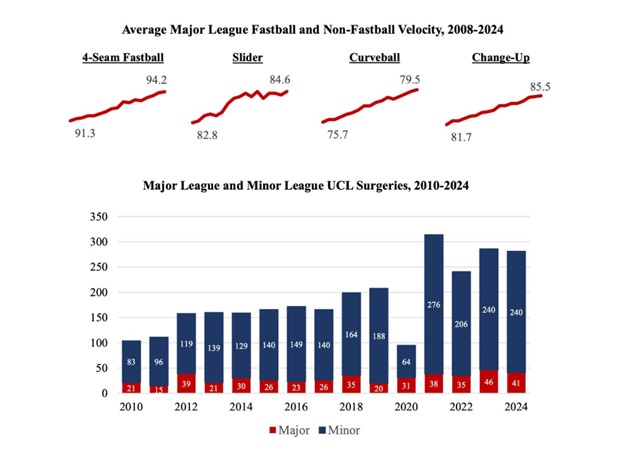
per MLB.com
According to Jeff Passan in The Arm, pitchers who average 93+ mph fastballs are 2x more likely to land on the injured list the following season than <90 mph pitchers (21% vs 11%).
The evidence is mounting towards the danger in relentlessly chasing higher velocity. It’s now commonplace for amateur teens to compete with radar guns at training facilities to appeal to pro baseball scouts.
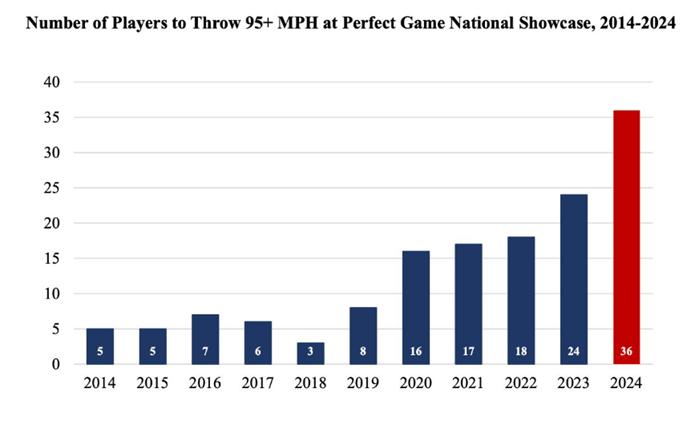
per MLB.com
The velocity craze isn’t without rationale: MLB.com states that fastballs less than 93 mph produce a .274 BA, .809 OPS, and 14.3% K rate.
96+ mph: .218 BA, .630 OPS, 27.5% K rate. A dramatic difference. But MLB executives struggle to reconcile the benefits of high velocity with the apparent injury risk.
MLB execs face a can’t win situation if pitchers worth 100+ million dollars continue to blow their arms out. The Rangers signed 2-time Cy Young flamethrower Jacob deGrom to a 185 million contract in hopes of him being their ace. DeGrom has hardly pitched for the team since 2023 due to a UCL tear. Out of all the Tommy John surgery patients that pitched in 2024, the threw 4-seam fastballs an average of 35% of the time. Once again, this number is reflective of MLB averages, but maybe pitchers like Houck who do not rely on fastballs (41% sweeper usage), could be more prudent investments.
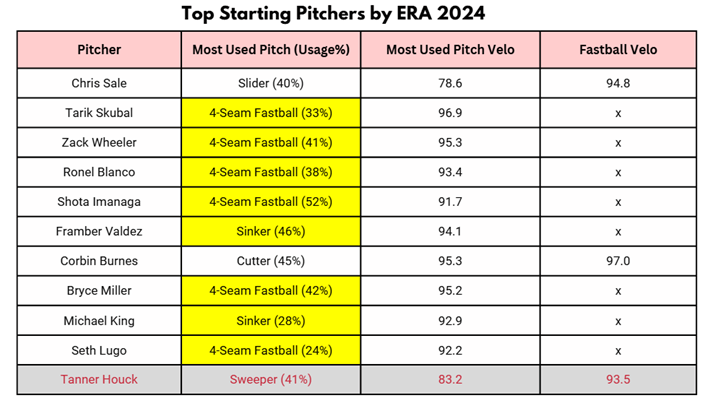
Figure 3: Top 11 starters in ERA 2024. Predominantly fastball pitchers highlighted in yellow
Tanner Houck was the 11th ranked starter in ERA, and was the sole pitcher in the top 11 to predominantly feature the sweeper. Chris Sale (1st ranked) features his slider 40% of the time, but 6/10 of the players ahead of Houck use a 4-seam fastball more than any other pitch. 8/10 use any fastball most often. Clearly, he was able to produce outs in an unconventional manner.
As I referenced in my article on ballpark factors for free agents, Max Fried is a pitcher who’s proven to be elite by utilizing large disparities between pitch shapes to keep hitters off balance. Baseballsavant lists Fried as an .82 (max 1.0) similarity to Tanner Houck, according to their barrel rates and batted ball profiles. They both coax hitters into grounders at a high clip, avoiding barrels with their windshield wiping pitches.
Taking a glance at Houck’s percentile chart shows the likeness:
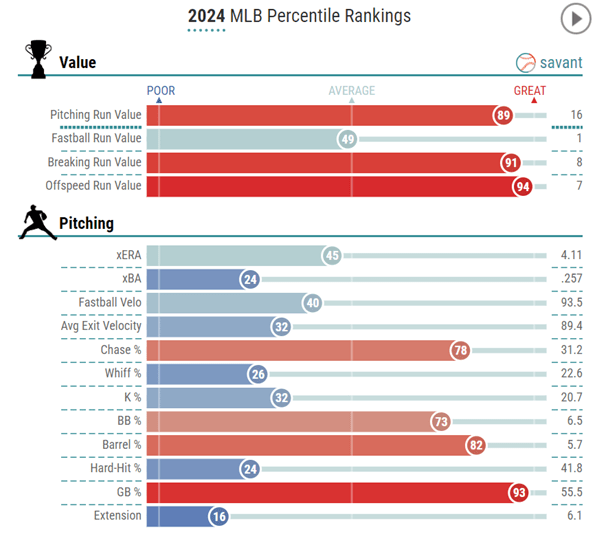
Figure 4: Tanner Houck MLB percentiles 2024, baseballsavant
Houck’s percentiles portray his ability to have success without an overpowering fastball (40th percentile). His recipe is in his mix of coiling shapes, inducing groundballs at an elite level (93rd percentile) and mitigating hard contact (82nd percentile in barrel rate).
In fact, he’s also able to accomplish this by stealing strikes on the corners with his sweeper. The average swing percentage in the lower left corner on sweepers was 47% last season, with Houck at 73% (+36 pp above average).
Compare the percentiles to Fried:
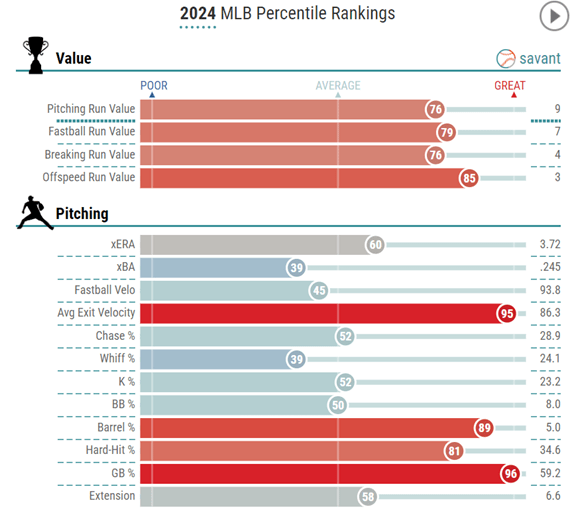
Figure 5: Max Fried MLB percentiles 2024, baseballsavant
Fried posts a 96th percentile groundball rate and 89th percentile barrel rate without a blistering fastball either(45th percentile).
Houck’s likeness to Fried along these dimensions advocates for his potential in replicating his success.
However, this talent for manipulating hitters into feeble grounders has a stereotype attached to it. Because his profile doesn’t feature a high strikeout rate (32nd percentile), perception of his archetype of pitcher is that they are susceptible to batted ball luck. Many scouts identify strikeout rate as the most significant factor in evaluating players, because of its independence from fielding.
However, there are a handful of successful pitchers like Max Fried in the MLB that weaponize unique pitch types to evade batters’ barrels, without the fastball heat. Additionally, given the established link between velocity and UCL tears, pitchers like Houck could be increasing in value.
 Nathan Mehta -
Leave a comment